Color isn’t just about aesthetics, it’s a silent but powerful communicator that can influence how people feel, think, and react to your brand. From the moment a potential customer encounters your logo, packaging, or website, your chosen colors begin to tell a story, often before a single word is read.
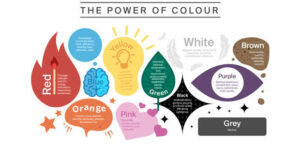
Imagine walking into a store and seeing two brands: one uses bold red and black, while the other features soft blues and whites. Instantly, your brain begins making judgments, perhaps one feels edgy and exciting, while the other feels calm and trustworthy. That’s the psychology of color in action.
Whether you’re designing your logo, building a website, crafting your social media visuals, or creating packaging, your color palette is a strategic tool, not just a design choice. It can attract your ideal customer, build emotional connections, and differentiate you in a crowded market.
In this post, we’ll explore the psychology of color, break down the meanings behind common hues, and provide practical tips for using color effectively to reflect your brand’s personality, connect with your audience, and drive engagement.
Understanding the Psychology of Color
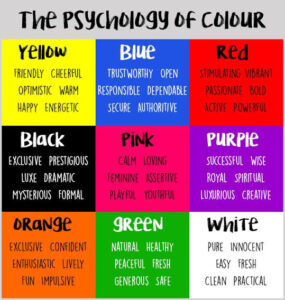
Color psychology is the study of how different hues affect human behavior, emotions, and perception. It helps explain why we gravitate toward certain colors and why they can influence our decisions, often without us even realizing it. In branding, where first impressions are crucial and often visual, color becomes a powerful tool for shaping how people see and feel about your business.
Think about your last shopping experience online or in-store. Did a product catch your eye before you even knew what it was? The odds are high that color played a role. Whether it was the bold red of a sale sign or the calming green of a natural skincare label, your brain started forming associations the moment you saw it.
Colors don’t just look good, they send messages and evoke emotions. This is why brands invest time and research into choosing the right palette. The goal is to connect with their audience emotionally and guide their perception in a way that aligns with the brand’s mission and values.
Examples in Action:
- Blue – Trust, loyalty, and stability. This is why banks (like Chase or PayPal), healthcare brands, and tech companies (like Facebook or Dell) often use blue to signal reliability and professionalism.
- Red – Excitement, urgency, and passion. Red is attention-grabbing and is frequently used in fast food (e.g., McDonald’s, KFC), clearance tags, and call-to-action buttons to create a sense of urgency.
- Green – Nature, health, and renewal. Common among eco-conscious, health, and wellness brands like Whole Foods, Tropicana, and The Body Shop, green signifies freshness and balance.
- Yellow – Optimism and energy. Used by brands like McDonald’s (in combination with red) and IKEA to evoke cheerfulness and draw attention.
- Black – Sophistication and elegance. High-end fashion brands like Chanel and luxury car brands like Lexus use black to convey exclusivity and class.
Understanding the psychological impact of color can help you craft a visual identity that not only looks appealing but also communicates trust, excitement, calm, or whatever emotion you want your brand to evoke.
The Meanings Behind Popular Colors
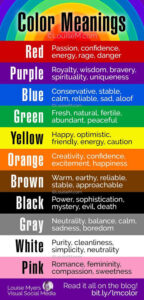
Colors carry meaning, not just in how they look, but in how they make us feel. While interpretations can vary slightly based on tone, brightness, and cultural context, certain associations are widely recognized and used strategically in branding and design.
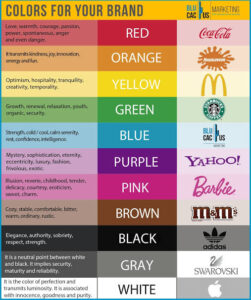
Understanding what each color symbolizes can help you choose a palette that aligns with your brand values and communicates your message clearly. Here’s a more detailed look at what popular colors represent:
- Red – Passion, urgency, love, danger. Red is bold, energetic, and attention-grabbing. It evokes strong emotions and can stimulate appetite, which is why it’s often used in food and retail industries. It also creates a sense of urgency, perfect for sales and clearance promotions.
- Orange – Warmth, friendliness, creativity. A playful and inviting color, orange combines the energy of red with the cheer of yellow. It’s often used by brands that want to appear approachable and enthusiastic. It also encourages action without the aggressiveness of red.
- Yellow – Optimism, cheer, youth. Yellow captures attention and communicates positivity. It’s often associated with sunshine, joy, and youthfulness. Brands use it to project happiness or to grab attention, especially in children’s products or fast-moving consumer goods.
- Green – Nature, health, growth, stability. Green is calming and represents life, renewal, and harmony. It’s commonly used by brands in health, wellness, and sustainability spaces. It also suggests balance and financial prosperity, making it a favorite in eco-conscious and financial industries.
- Blue – Professionalism, trust, calm. Blue builds credibility. It’s seen as trustworthy and secure, which is why banks, tech companies, and healthcare brands often use it. Lighter blues feel refreshing and peaceful, while deeper blues convey strength and reliability.
- Purple – Royalty, luxury, mystery. Historically associated with royalty and wealth, purple is often used by brands wanting to evoke elegance, creativity, or spiritual insight. Lighter purples feel whimsical or romantic, while darker purples feel rich and sophisticated.
- Pink – Femininity, sweetness, romance. Often associated with softness and care, pink appeals in beauty, fashion, and children’s markets. It can range from gentle and nurturing to bold and modern, depending on the tone.
- Black – Elegance, authority, power. Black is timeless and versatile. It can be modern or classic, minimal or luxurious. Often used in high-end fashion and tech, it communicates strength, sophistication, and control.
- White – Cleanliness, simplicity, innocence. White evokes purity, peace, and simplicity. It’s commonly used in minimalist and modern branding, especially in wellness, tech, and beauty industries. It also provides a sense of space and clarity.
- Gray – Balance, neutrality, professionalism. Gray is practical, mature, and neutral. It’s frequently used in corporate branding to signify professionalism and stability. Combined with bolder colors, it provides contrast and sophistication.
Using Color Strategically in Branding
Knowing what colors represent is just the beginning. The real magic happens when you apply that knowledge strategically, aligning your color choices with your brand’s identity, goals, and audience expectations. Here’s how to do it effectively:
- Match Your Brand Personality: Start by identifying your brand’s core traits. Are you playful and bold? Calm and professional? Luxurious and exclusive?
- Playful, energetic brands (like kids’ products or startups) often thrive with bright hues like yellow, orange, or turquoise.
- Luxury or high-end services benefit from rich, deep tones like black, gold, or royal purple.
- Health and wellness brands work well with green, light blue, or soft neutrals.
Tip: Create a mood board that reflects your brand’s personality before choosing colors.
- Create Contrast and Visual Hierarchy: A solid brand palette usually includes:
- A primary color that reflects your brand essence
- One or two accent colors to draw attention to CTAs (calls to action), buttons, or headlines
- A neutral background color (like white, gray, or beige) for balance
Using contrasting shades not only grabs attention but also improves usability, especially on digital platforms.
Example: A brand with navy blue as a base can use a bright orange or mint green for clickable buttons and links.
- Stay Consistent Across Platforms: Color consistency builds brand recognition. Your exact color shades (HEX, RGB, CMYK) should appear the same across:
- Websites
- Logos
- Social media graphics
- Business cards and packaging
- Email templates
Pro tip: Create a brand style guide with a color palette section, including names, HEX codes, and examples of proper usage.
- Be Culturally Aware: If your brand operates globally or targets a diverse audience, be mindful of cultural associations with color.
- White = purity in Western cultures, but mourning in some Asian cultures.
- Red = danger or urgency in the West, but celebration and luck in China.
- Green = nature in most cultures, but can mean jealousy or even bad luck in others.
When in doubt, test color options with your audience or consult local experts before launching major campaigns.
Conclusion: Design With Meaning
Color isn’t just a design detail, it’s a brand voice. From your website to your logo, your color palette should speak directly to your audience’s hearts and minds. When used with purpose, color creates emotional resonance, improves recognition, and turns casual visitors into loyal customers.
So the next time you’re picking out colors, ask yourself: What emotion do I want people to feel? Let your answer guide your design choices and watch your brand come alive.